CYP3A4 with its haem, PDB 1TQN

Modules

Our AI Drug Discovery Modules

An integrated platform for smarter, more explainable drug discovery. Alosenta is building an integrated suite of AI-powered modules designed to support decision-making across the drug discovery and development process.

From generating and optimising new molecules to identifying toxicity risks, predicting off-target interactions, designing antibodies, optimising drug combinations and assessing financial risk, each module addresses a specific challenge within the discovery workflow. A core principle across the platform is explainability. Rather than relying solely on black-box predictions, Alosenta’s modules are designed to provide scientists, drug developers and decision-makers with the underlying rationale and evidence supporting each recommendation.

Explainable AI for real-world drug discovery

Alosenta’s objective is not to replace scientific judgement with an algorithm. Our platform is designed to give researchers and decision-makers better tools to navigate complexity, reduce unnecessary experimentation and focus resources on the most promising opportunities. By combining molecular generation, structural analysis, toxicity screening, biological reasoning and financial risk assessment, Alosenta is building an AI-driven discovery environment designed to make drug development faster, more systematic and more transparent.

One Platform. Multiple Decision Layers.

Together, our modules create an integrated decision-support environment spanning multiple stages of drug discovery:
Generate → Optimise → Screen → Analyse → Combine → Evaluate

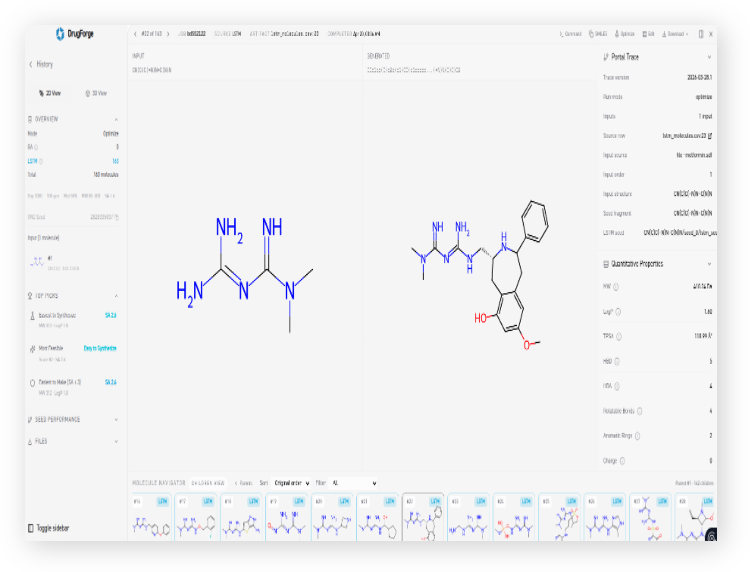
  • DrugForge Generate and engineer molecules
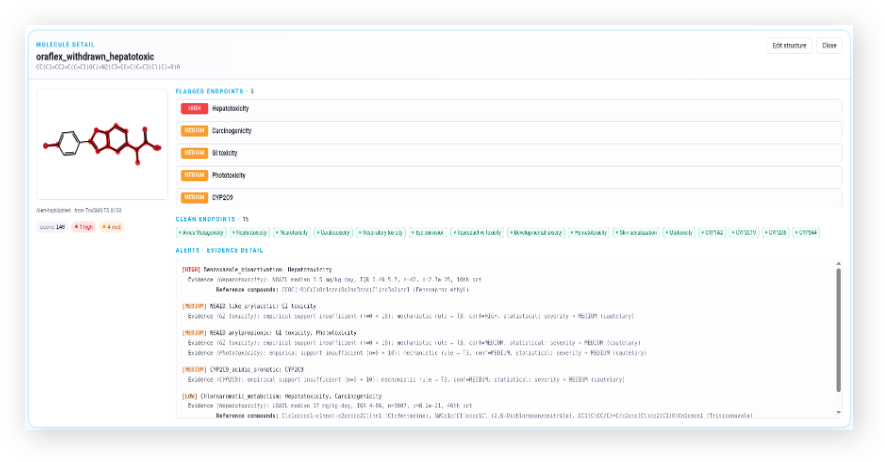
  • ToxSMILES Identify structural toxicity risks
  • Galaxy Predict potential off-target interactions
  • Combiner Identify promising therapeutic combinations
  • Interfacer Design and optimise high-affinity binders
  • FinSMILES Translate scientific risk into financial insight

Modules

DrugForge

AI-powered molecule generation and engineering

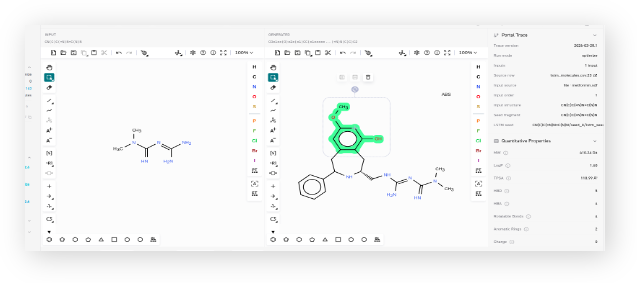
DrugForge is designed to generate new molecular entities from scratch or intelligently modify existing compounds. Users can define the physical and chemical characteristics they are seeking, allowing the system to generate molecules within specific design criteria. The platform accepts both 3D molecular structures and SMILES formats and can propose chemically realistic modifications, including R-group substitutions, isomeric rearrangements and bioisosteric replacements. Each generated molecule is accompanied by calculated physicochemical properties and a synthetic accessibility score, helping researchers assess molecular complexity and feasibility. Importantly, DrugForge is designed to preserve the relevant pharmacophore and desired molecular characteristics, ensuring that generated candidates remain aligned with the original design objectives. From hit generation to lead optimisation, DrugForge helps expand the chemical search space while keeping molecular design grounded in user-defined criteria.

DrugForge

ToxSMILES

Structural toxicity screening

ToxSMILES provides a second layer of screening by analysing molecular structures for potential toxicophores and structural alerts associated with known toxicological risks.

The module uses a rule-based approach designed to make the relationship between a structural feature and its potential toxicity transparent and understandable to chemists. Structural alerts are sourced through PubChem, with associated NOAEL and LOAEL information provided where available. ToxSMILES also allows molecules to be edited in real time, enabling researchers to explore whether specific structural modifications may address identified toxicity concerns or other chemical design criteria. The objective is not simply to flag risk, but to provide actionable information that can guide molecular optimisation.

ToxSMILES
ToxSMILES

Galaxy

Off-target prediction through interactome analysis

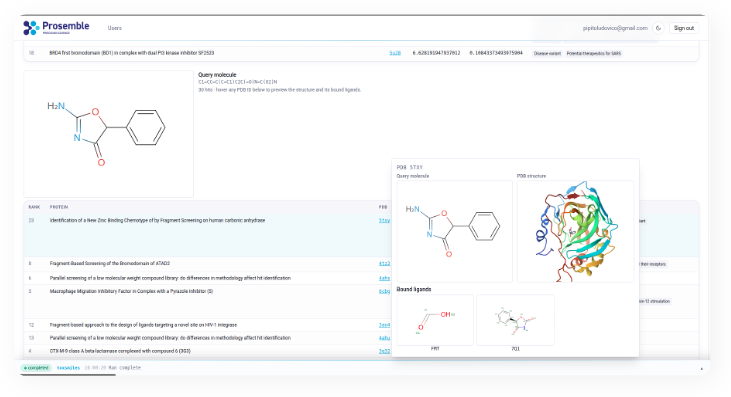
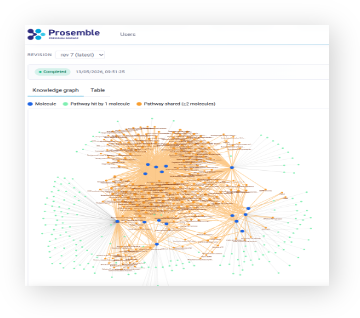
Unexpected interactions with proteins outside the intended therapeutic target can contribute to adverse reactions and late-stage drug development failure. Galaxy is designed as an off-target diagnostic screening tool, using interactome analysis to identify potential cross-reactive protein targets. The module uses a graph neural network trained on approximately 24,000 human crystallographic data points to propose potential receptor interactions based on molecular mechanics and experimental 3D structural data from the RCSB Protein Data Bank. For each molecule, researchers can review a traceable list of potential protein interactions and examine the associated structures and biological pathways. Galaxy helps researchers move beyond a single intended target to understand the broader biological interaction landscape of a candidate molecule.

Galaxy
Galaxy

Combiner

Drug combination optimisation

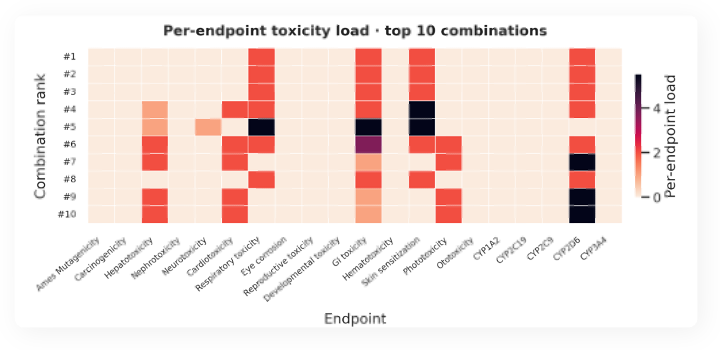
Combiner is designed to help biology and formulation teams identify promising drug pairs and triplets.

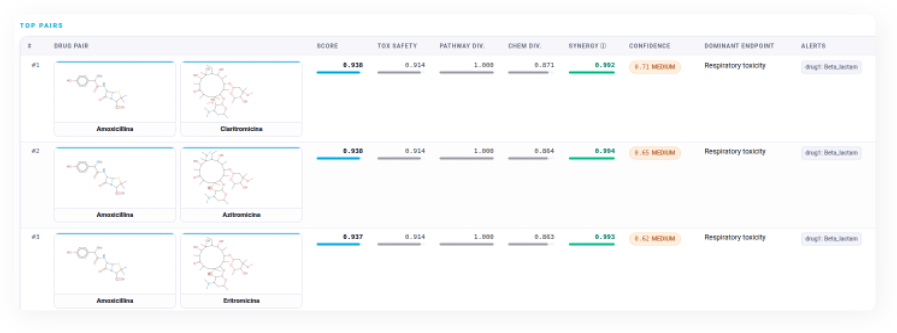
The module evaluates potential combinations using three core criteria:

  • Maximising chemical diversity between compounds
  • Minimising overlap in therapeutic targets
  • Minimising cumulative toxicological effects

Every recommendation is accompanied by a description of how the combination was evaluated and the rationale behind the result.

As demonstrated in Alosenta’s Multiple Myeloma and EGFR+ Lung Cancer case studies, this approach can help identify mechanistically complementary combinations while filtering out those with excessive overlap or redundancy. Combiner is designed to turn the vast number of possible drug combinations into a prioritised and explainable shortlist for further investigation.

Combiner
Combiner

FinSMILES

Financial risk analysis for drug development

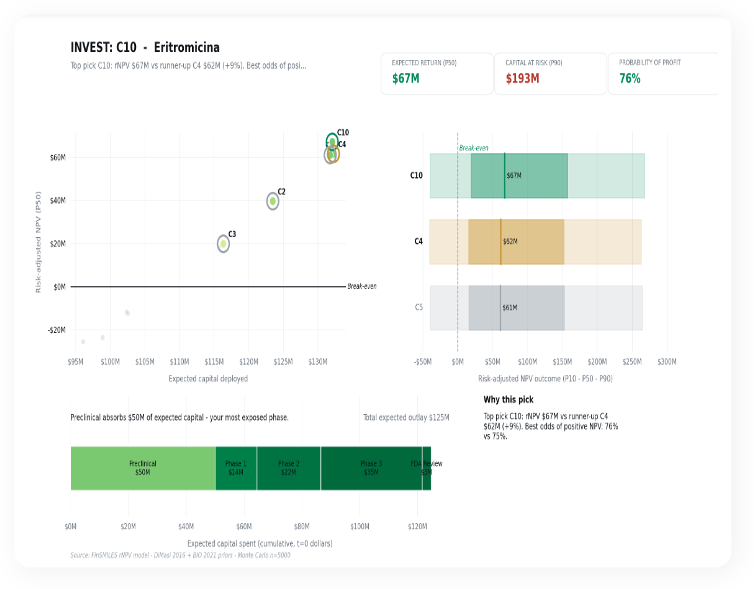
Scientific decisions and financial decisions are often made separately. FinSMILES is designed to help bridge that gap. The module translates toxicity predictions into a risk-adjusted Net Present Value (rNPV) assessment for each compound across different stages of clinical development. Using clinical development parameters and attrition statistics derived from long-term financial and industry data, FinSMILES provides a calibrated developmental liability score representing the estimated probability of clinical safety failure. This information can be used as a triage layer to support go/no-go and portfolio allocation decisions, particularly for candidates that have already undergone scientific and toxicological characterisation. FinSMILES helps decision-makers understand not only whether a drug candidate may work, but also the potential financial implications of its development risk.

FinSMILES

Interfacer

AI-powered antibody design and affinity optimisation

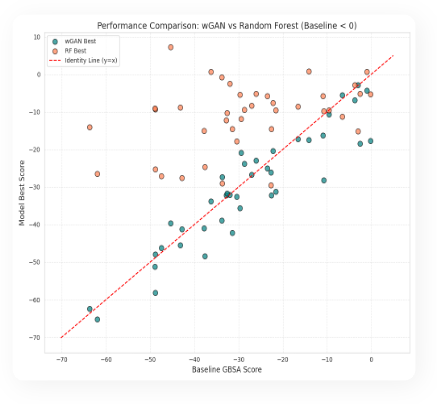
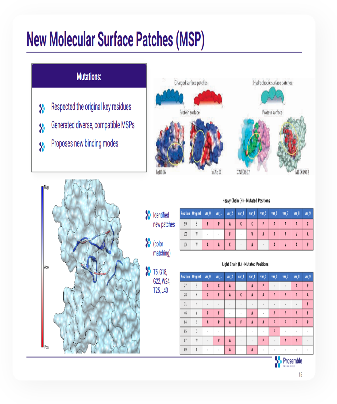
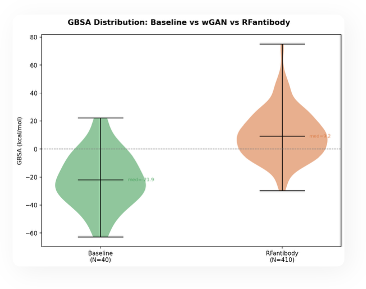
Interfacer is Alosenta’s physics-based generative architecture for the design and optimisation of high-affinity binders. The platform is trained on approximately 190,000 experimental 3D structures, including human antibodies, monoclonal antibodies, peptides and single-chain antibody–antigen complexes. Starting from an existing structure, Interfacer can generate a wide range of sequence variations and corresponding 3D structural models. These candidates are then evaluated using biophysical methods to support the identification and optimisation of higher-affinity binders. Unlike tools primarily focused on structural plausibility, Interfacer is designed specifically for affinity optimisation, with the objective of identifying binders with improved interaction characteristics. Interfacer combines generative AI with structural biology and biophysics to accelerate the engineering of next-generation antibodies and protein binders.

Interfacer
Interfacer
Interfacer

Working with